
Central Media Warns Against “Hardware Overload”: How the Lighting Industry Can Advance Real-World Application of Smart Light Poles
Recently, major central media outlets such as Economic Daily and Xinhua News have published in-depth commentaries on the issue of “smart light poles being costly yet ineffective.” They clearly emphasize the principles of “demand-driven development, moderate forward-looking planning, and integrated application.” These principles not only provide clear guidance for the high-quality construction of smart light poles, but also offer strong corrective direction for current industry deviations.
Today, the trend of “over-emphasizing hardware stacking while neglecting scenario effectiveness,” and “hyping concepts while undervaluing operation and maintenance,” has become increasingly prominent. Some projects blindly pile on functional modules, causing smart light poles to become “showpiece projects.” Others pursue “high-tech” labels while ignoring real operational capability, resulting in resource waste and even safety risks.
As a core driving force in smart light pole construction, the lighting industry—armed with professional advantages in pole structure design and light-environment integration—should have served as an “enabler” in urban smart development. However, under the market boom, it has fallen into three major cognitive traps: Misaligned positioning, Missing system integration and Short-sighted operational thinking.
Positioning Deviation: From "Urban Infrastructure" to "Conceptual Showcase"
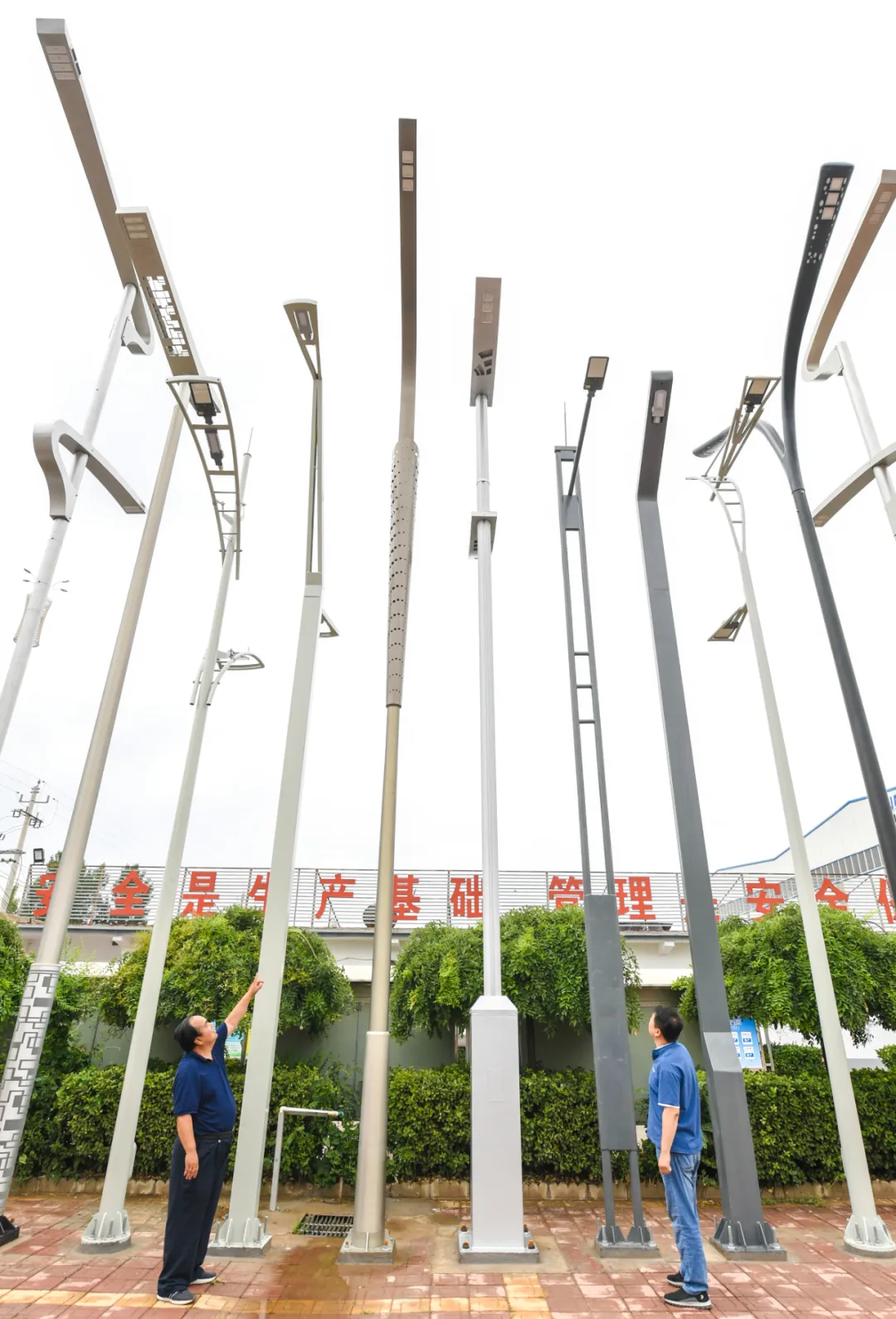
Central media emphasize that the core value of smart light poles lies in “serving urban governance and facilitating public life.” However, many lighting companies have turned them into “technology-stacked showpieces,” falling into the misconception that “the more functions, the more high-end.” As a result, project construction is often disconnected from actual urban needs.
This misunderstanding of value directly leads to resource waste and functional idleness.
In one provincial capital, smart light poles along main roads were equipped with 12 functions—including environmental monitoring, 5G micro-stations, information display, and emergency call—but each pole cost over 30,000 yuan. Due to the lack of data integration with departments such as traffic management and urban management, environmental monitoring data was never utilized beyond backend display, and the emergency call button was not used even once in six months.
In another tourist district, smart poles were fitted with facial recognition modules, but public privacy concerns and tourist resistance forced the function to be shut down. These cases validate central media’s assertion that “innovation detached from real needs is meaningless,” and expose the industry’s neglect of the smart pole’s nature as infrastructure—its value lies not in the number of features, but in whether it can solve real problems in urban management.
More alarmingly, this value misjudgment has distorted industry competition. Some lighting enterprises treat smart poles as “transformation gimmicks,” competing not on scenario-based solutions but on the quantity of integrated functions and hardware specifications. To win bids, some even adopt a “lowest-price wins” strategy, using low-quality sensors and control systems—compromising project effectiveness and creating safety hazards. This “focus on sales over implementation” model runs counter to the central media’s call for “quality improvement and efficiency enhancement.”
From "Integrated Applications" to "Simple Stacking": The Practical Misconception
The central media’s emphasis on “integrated application” directly points to the core pain point of smart pole construction—technology and application scenarios often exist as two separate layers. Many lighting enterprises lack system-level thinking and simply piece together various function modules without data interaction or coordinated linkage, resulting in technologies that fail to transform into real service capabilities.
At the level of function integration, fragmentation is widespread. In a smart pole project in a newly developed city, the lighting control, traffic monitoring, and information publishing systems operated independently, each maintained by different companies. When failures occurred, they passed responsibility to one another.
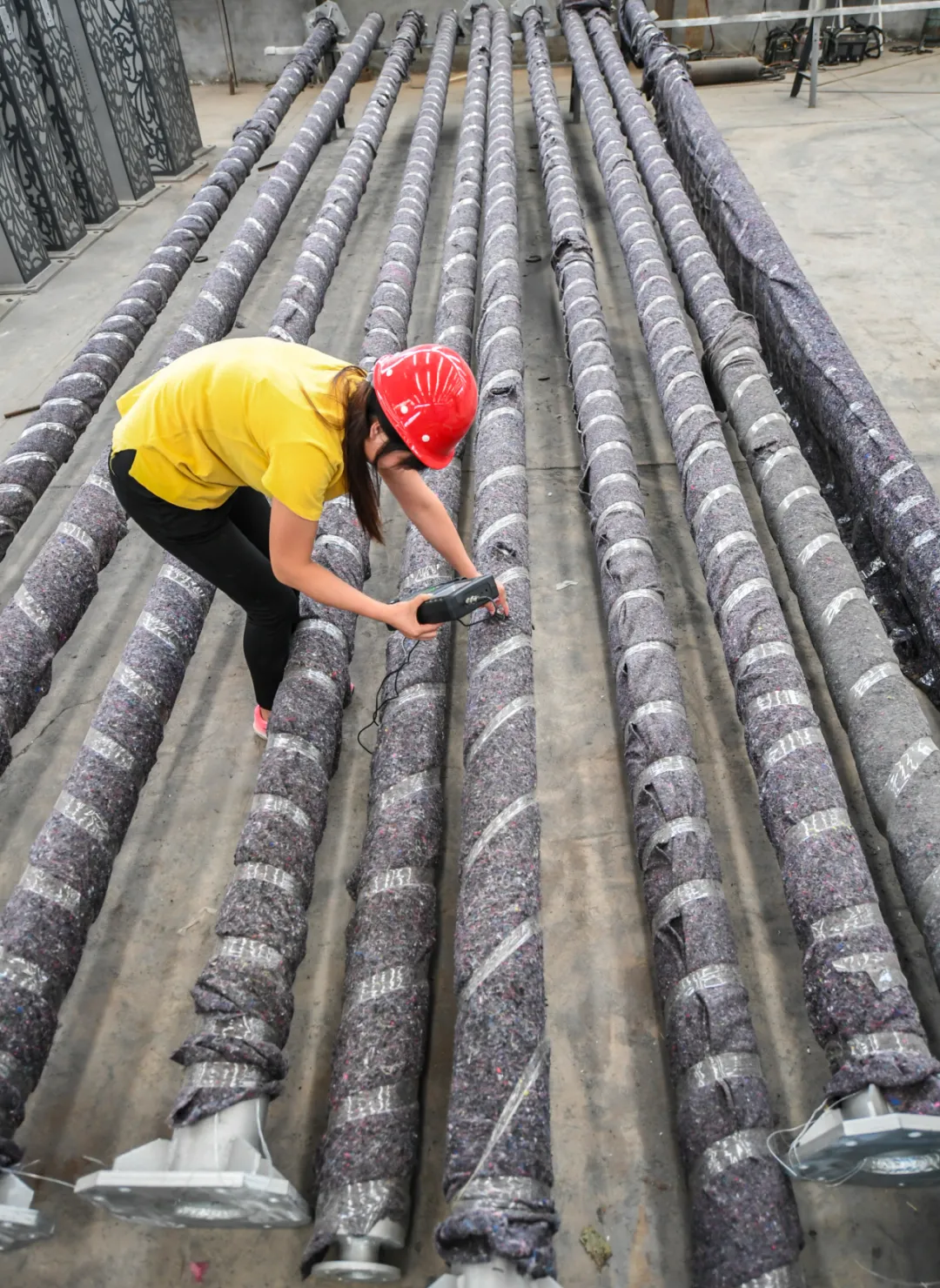
In another industrial park, although smart poles included EV charging functions, the design failed to account for peak charging loads, leading to frequent tripping during high-demand periods. The root cause is that many lighting companies lack the capabilities of a true system integrator, remaining at the stage of “hardware assembly” without achieving data interoperability or coordinated scheduling between modules—contradicting the central media’s requirement for “integrated construction.”
A similar “disconnect” appears in combining lighting environments with smart functions. Some projects separate smart modules from lighting design, either sacrificing lighting comfort to pursue “smart features”—for example, poles built too tall, resulting in uneven road illuminance—or ignoring the potential of smart lighting, such as limiting control to simple remote switching without adjusting brightness or color temperature based on pedestrian or vehicle flow. Compared with Shenzhen Qianhai’s refined approach—“automatically adjusting lighting intensity according to traffic flow” and “synchronizing light colors with weather alerts”—most projects remain at an early stage of “smart lighting” and fail to leverage lighting’s fundamental collaborative value.
From "Long-Term Operation" to "Build-and-Forget": The Model's Hidden Weaknesses

Central media outlets have emphasized the need for a long-term operation and maintenance mechanism for smart light poles—an observation that precisely exposes the industry’s critical weakness of valuing construction over operation. At present, most lighting enterprises only participate in the early construction phase of smart light poles and lack the capability and awareness to provide ongoing maintenance services. As a result, many projects become “outdated the moment they are completed” and “abandoned once put into use.”
The absence of a sound O&M system significantly undermines device effectiveness. In one prefecture-level city, a smart light pole project saw 30% of environmental monitoring sensors produce drifting data and 20% of information display panels malfunction just one year after completion due to the lack of a professional maintenance team. In another industrial park, the 5G micro-station modules on smart poles became ineffective because firmware was not updated in time to support the carrier’s new frequency bands—reducing the modules to nothing more than decorative hardware. These issues reveal the industry’s insufficient understanding of full life-cycle management, contradicting central media’s call for construction that is “appropriately advanced yet sustainably maintainable.”
Data security risks and inconsistent standards further complicate long-term operation. Different companies adopt independent data protocols for their smart poles, creating data silos across city-level projects and preventing cross-regional and cross-departmental coordination. In some cases, the lack of data encryption and access control has led to risks of privacy breaches and cyberattacks. Although the Ministry of Housing and Urban-Rural Development has released a national standard, Technical Requirements for Smart Light Pole Systems, some enterprises still use non-standard components to reduce costs—creating major obstacles for unified maintenance in the future.
From "Basic Infrastructure" to "Conceptual Showcase": A Misaligned Positioning

Central media emphasize that the core value of smart light poles lies in serving urban governance and facilitating citizens’ daily lives. However, many lighting enterprises have distorted this concept, treating smart light poles as “technical showcases” overloaded with functions—falling into the trap of believing that “the more modules, the more advanced”. As a result, project construction often deviates significantly from actual needs.
This misjudgment of value has directly led to wasted resources and idle functions. In one provincial capital, smart light poles installed along major roads integrated 12 functions—including environmental monitoring, 5G micro stations, information display, and emergency calls—with a cost of over 30,000 RMB per pole. Yet due to the lack of data integration with traffic and urban management departments, environmental data merely remained on internal dashboards, and the emergency call button was not used even once in six months.
In a tourist district, smart poles were equipped with facial recognition modules, but due to privacy concerns and visitor resistance, the function was eventually shut down. These cases validate the central media’s assertion that “innovation detached from real needs is meaningless”, while also exposing the industry’s neglect of the smart light pole’s “infrastructure essence”—its value lies not in the number of functions, but in its ability to solve real problems in urban management.
Even more concerning, this misaligned value perception has distorted industry competition. Some lighting companies regard smart light poles as a “transformation gimmick,” competing not in scenario-based solutions but in the sheer quantity of modules and hardware specs. To win bids, some even resort to low-price strategies, using low-quality sensors and control systems—compromising project effectiveness and introducing safety risks. This sales-driven rather than results-driven approach runs counter to the central media’s call for “quality improvement and efficiency enhancement.”