China's Lighting Product Exports to the U.S. Plunge 23.2%: An Analysis of Recent Export Trends
In May 2026, U.S. President Donald Trump made another visit to China and held a historic summit with Chinese leaders in Beijing. The high-level meeting sent a signal that, despite prolonged tensions, both countries are seeking limited and pragmatic cooperation amid strategic competition. Although disagreements over intellectual property, geopolitics, and critical technologies remain significant, proposed dialogue mechanisms such as those involving the U.S.-China Business Council have offered a glimmer of hope for tariff adjustments and the restructuring of trade flows in traditional, non-sensitive manufacturing sectors.
In recent years, China's lighting product exports to the United States have faced mounting external pressures as a result of Sino-U.S. tariff disputes and global supply chain realignment. The tariff barriers imposed during both the first and second Trump administrations, together with the ongoing diversification of global supply chains, have fundamentally reshaped the export landscape for Chinese lighting manufacturers.
Against the backdrop of renewed bilateral dialogue and evolving trade mechanisms, a closer examination of recent export data provides valuable insight into the challenges currently facing the industry. It also offers an important reference for lighting exporters seeking to optimize their market strategies, adjust their product portfolios, and strengthen their competitiveness in an increasingly complex global trading environment.
I. Overview of the Market Landscape: Cyclical Fluctuations in China's Lighting Exports to the U.S. Amid Multiple Pressures
Between 2022 and 2025, China's lighting product exports to the United States experienced a clear transition from a period of relative stability to a prolonged market correction and gradual normalization. The long-term implementation of U.S. tariffs on Chinese goods has effectively eliminated artificially inflated external demand, with the market increasingly returning to fundamentals driven by U.S. inventory adjustments and the ongoing diversification of global supply chains.
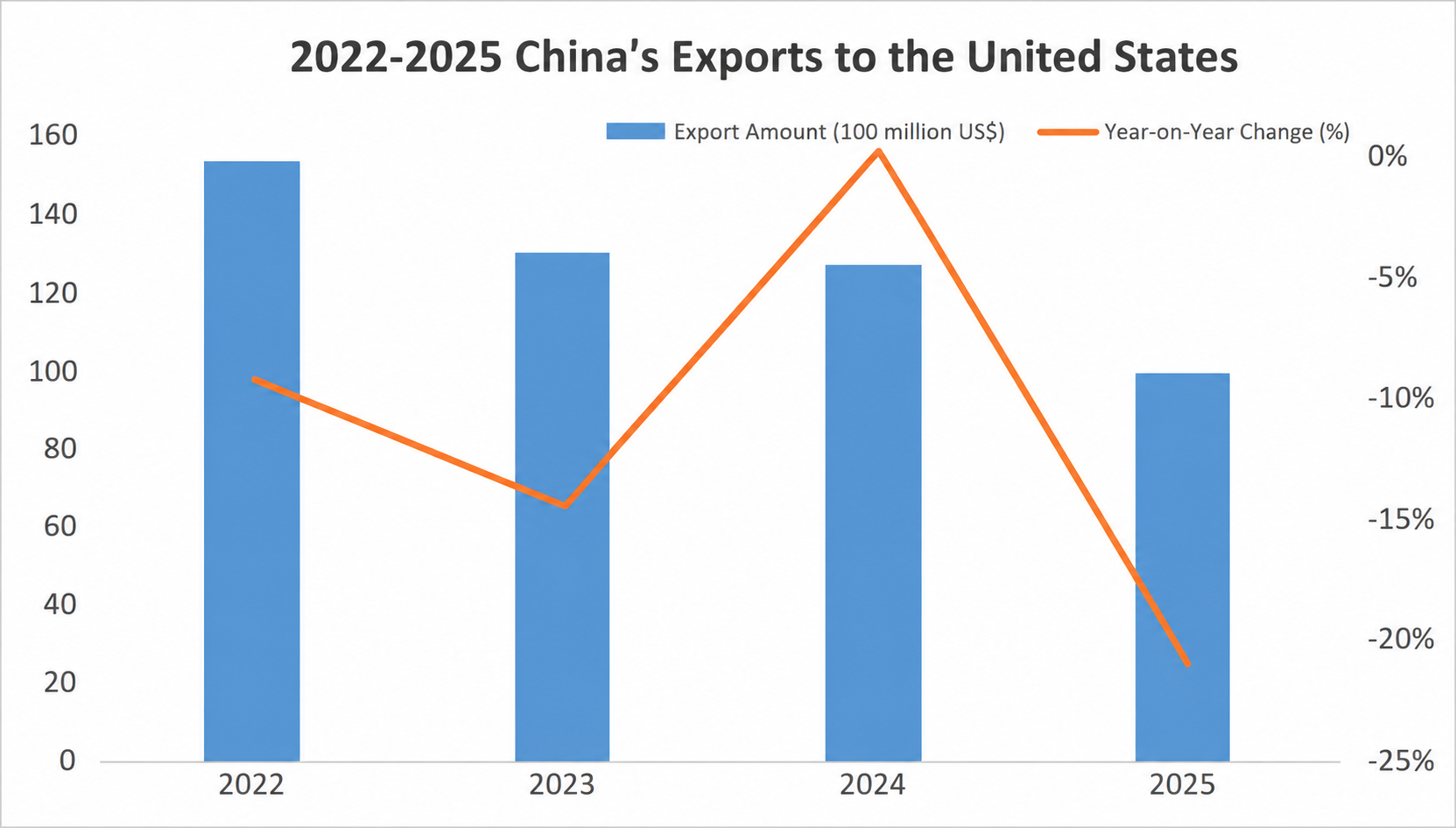
According to China's customs export statistics, lighting product exports to the United States reached US$15.225 billion in 2022, remaining at a relatively high level as overseas consumer demand continued to recover in the aftermath of the COVID-19 pandemic. In 2023, exports declined to US$12.817 billion, representing a 15.8% year-on-year decrease. Aggressive interest rate hikes by the U.S. Federal Reserve cooled the housing market, which in turn weakened end-user demand for lighting products.
In 2024, exports totaled US$12.693 billion, down only 0.96% year on year, indicating a temporary period of relative stability despite ongoing macroeconomic pressures. However, in 2025, rising uncertainty and persistently high inflation further eroded consumer purchasing power, causing exports to fall to US$9.743 billion, a significant 23.2% year-on-year decline, marking the lowest point of the current downcycle.
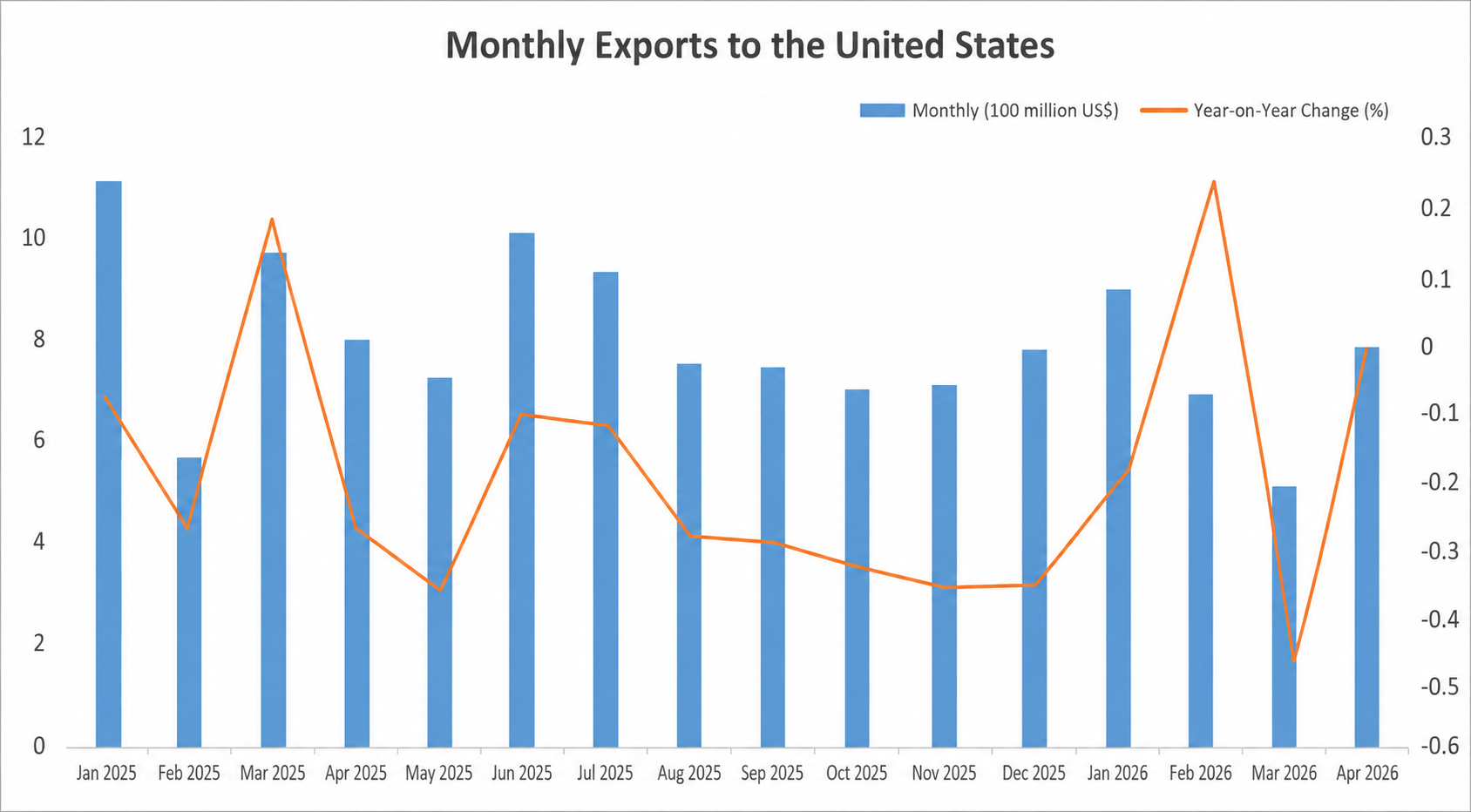
During the first half of 2025, China's lighting exports to the United States remained under considerable pressure. With the exception of March, which recorded a 21.1% year-on-year increase due to a post-Chinese New Year surge in customs clearance, most months experienced double-digit declines. Exports fell by 29.1% in February, 27.6% in April, and 36.5% in May. In the second half of the year, the downward trend became even more pronounced, with year-on-year declines consistently ranging between 30% and 36% from September through December.
Entering 2026: Geopolitical Tensions Disrupt Global Logistics. In January 2026, exports totaled US$884 million, down 20.6% year on year, extending the weak performance seen in the previous year. In February, exports reached US$687 million, representing a 23.5% year-on-year increase. The sudden escalation of tensions in the Middle East prompted many exporters to anticipate a sharp rise in ocean freight rates, triggering a short-term wave of advance shipments.
However, in March, exports fell dramatically to US$503 million, a 48.4% year-on-year decline. Following the full-scale outbreak of the U.S.–Iran conflict, Iran closed the Strait of Hormuz, while Brent crude oil prices surged above US$120 per barrel. The resulting disruption to global shipping and logistics severely affected trade flows, causing China's lighting exports to the U.S. to be nearly halved.
By April, exports recovered to US$779 million, with the year-on-year decline narrowing to 1.7%. As global supply chains gradually adapted through emergency shipping rerouting and alternative logistics arrangements, export performance improved significantly, demonstrating the remarkable resilience and recovery capability of China's lighting manufacturing supply chain.
Ⅱ. Provincial Performance in 2025: Strong Coastal Concentration with Diverging Regional Trends
Amid the overall downturn in China's lighting exports to the United States, the country's traditional coastal lighting manufacturing hubs continued to dominate export volumes despite experiencing notable declines. These provinces remained the backbone of China's lighting export industry, supported by their well-established manufacturing capabilities, mature supply chains, and extensive international customer networks.
At the same time, several inland and border provinces recorded relatively strong growth against the broader market trend. Benefiting from the expansion of cross-border e-commerce, bonded logistics zones, and favorable regional policies, these areas demonstrated greater resilience and, in some cases, achieved noticeable increases in exports despite the challenging external environment.
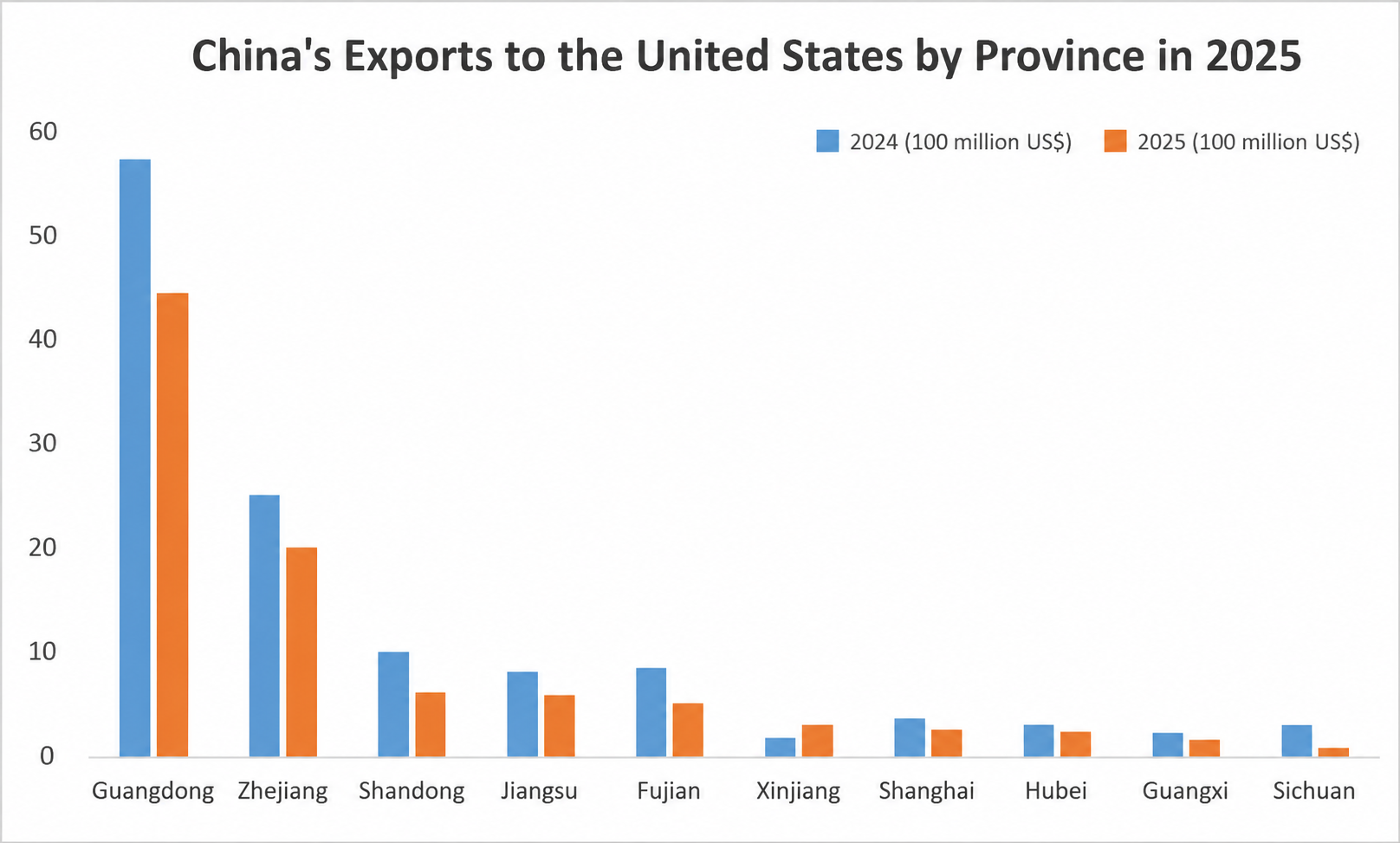
In terms of provincial rankings, Guangdong Province, with exports totaling US$4.463 billion, and Zhejiang Province, with US$2.056 billion, formed a clear first tier, accounting for more than half of China's total lighting exports to the United States.
However, affected by U.S. tariffs and the prolonged downturn in the real estate market, the five largest coastal exporting provinces all recorded double-digit year-on-year declines. Exports from Guangdong fell by 21.9%, Zhejiang by 17.7%, Shandong by 37.3%, Jiangsu by 27.6%, and Fujian by 35.8%.
In contrast, several provinces achieved remarkable growth from relatively low export bases. Hainan Province recorded exports of US$17.72 million, representing an impressive 2,139.6% year-on-year increase, while Gansu Province exported US$2.39 million, up 837.9%. Other regions also posted strong gains, including Xinjiang (+74.8%), Inner Mongolia (+81.9%), and Shanxi (+196.1%), highlighting the growing role of emerging export regions despite their comparatively small overall volumes.
Ⅲ. Product Category Analysis: Structural Substitution and Intensifying Competition in a Mature Market
1. Electric Light Sources: Traditional Products Continue to Decline While Specialized Light Sources Demonstrate Greater Resilience
Demand for conventional incandescent and fluorescent lamps continued to contract in 2025, while high-value-added specialty light sources for scientific and medical applications, together with ultraviolet and infrared light sources driven by green and energy-efficient technologies, demonstrated stronger resilience within an increasingly mature market.
Total exports of electric light sources reached US$1.098 billion in 2025, representing a 21.8% year-on-year decline. Among the major product categories, exports of other incandescent lamps fell by 31.4%, while incandescent lamps for scientific or medical applications recorded a dramatic 83.3% decline. As the industry's core export products, LED bulbs generated US$594 million in exports, down 24.1%, while LED tubes totaled US$230 million, a 20.3% decrease compared with the previous year.
In contrast, several high-barrier niche products achieved positive growth. Tungsten-halogen lamps for scientific and medical applications increased by 18.7%, tungsten-halogen lamps for railway vehicles, aircraft, and ships grew by 24.2%, and other discharge lamps for scientific and medical applications surged by 101.2%, highlighting the stronger resilience of specialized lighting products.
2. Luminaires: Declining Engineering and Commercial Demand Drives Market Polarization
The prolonged slowdown in the real estate and commercial construction sectors significantly reduced demand for fixed installation luminaires. By comparison, decorative light strings and portable consumer lighting products, supported by relatively stable seasonal and lifestyle demand, experienced more moderate declines, reflecting a shift in North American consumer spending from large-scale home investment toward smaller discretionary purchases.
In 2025, exports of luminaires totaled US$7.059 billion, a 25.5% year-on-year decline. Engineering and traditional commercial lighting products suffered the sharpest contraction. Exports of other chandeliers and ceiling or wall-mounted electric lighting fittings fell by 41.8%, while other electric table, desk, bedside, and floor lamps declined by 44.0%.
Despite remaining the largest export category, other non-photovoltaic LED lamps and lighting fittings generated US$2.172 billion in exports but still recorded a 15.0% year-on-year decrease. Meanwhile, LED Christmas light strings declined by 39.8%, indicating continued inventory correction in seasonal products. In contrast, non-photovoltaic LED searchlights and spotlights posted a modest 0.5% increase, suggesting that demand from outdoor, industrial, and security-related applications remained relatively resilient.
3. Other Lighting-Related Products: Automotive Lighting Demonstrates Strong Industry Resilience
Exports of other non-core lighting products reached US$1.585 billion in 2025, representing a comparatively moderate 12.5% year-on-year decline.
Supported by the ongoing transformation of the global automotive supply chain and sustained demand in both the new vehicle and aftermarket replacement sectors in the United States, motor vehicle lighting and electrical signaling equipment generated US$682 million in exports, declining by only 6.8% year on year. Compared with other lighting segments, automotive lighting demonstrated exceptional resilience, making it one of the industry's strongest-performing product categories amid the broader market downturn.
IV. Macroeconomic Outlook and Future Prospects: Finding Opportunities Amid Challenges
1. Monetary Policy and Interest Rate Cycles: Preparing for Continued Volatility
Geopolitical conflicts have fueled global energy inflation and sharp increases in commodity prices, disrupting expectations for interest rate cuts. As a result, market expectations for the U.S. Federal Reserve to resume interest rate hikes in the second half of the year have strengthened. Persistently high interest rates are expected to continue weighing on the U.S. housing market, limiting demand for lighting products and lowering the ceiling for overall export growth. At the same time, surging ocean freight rates and rising raw material costs are likely to offset much of the benefit gained from favorable exchange rate movements.
2. The Rise of AI: Transforming Lighting into Intelligent Edge Devices
The global AI revolution is rapidly extending from cloud computing to edge devices, making AI-powered lighting a key opportunity for companies seeking to overcome tariff pressures and increase product value. Manufacturers can integrate low-power AI edge computing chips, computer vision technologies, and radar sensors into lighting products to enable applications such as pedestrian tracking, adaptive energy management, and intelligent environmental sensing. AI algorithms can also support dynamic lighting control for specialized applications, including horticultural lighting and full-spectrum human-centric lighting, creating higher-value products with greater market differentiation.
3. Strengthening Export Compliance: Building Competitive Advantages Through Sustainability
As competition between China and the United States increasingly shifts toward supply chain compliance and carbon footprint management, regulatory requirements are becoming an important competitive factor. More international buyers are beginning to require full life-cycle carbon footprint reports from suppliers, making green manufacturing and sustainable production capabilities essential. Chinese lighting manufacturers should accelerate the development of green factories, improve environmental management systems, and strengthen compliance throughout the supply chain to remain competitive in the global market.
IV. Macroeconomic Outlook and Future Prospects: Finding Opportunities Amid Challenges
Looking back at China's lighting product exports to the United States between 2022 and 2026, it is clear that the industry is moving away from a growth model driven primarily by low costs and large-scale production. Although the adjustment has been painful, export performance appears to be stabilizing after a prolonged correction. The significant narrowing of export declines in April once again demonstrated the remarkable resilience and irreplaceable strength of China's lighting manufacturing supply chain.
Looking ahead, competition in an increasingly mature market will depend less on price and more on comprehensive capabilities. To secure long-term growth, Chinese lighting exporters must move beyond price-based competition and focus on AI-driven intelligent innovation, expand into high-value specialized segments such as industrial and medical lighting, and strengthen global supply chain compliance and sustainability. Only through this transformation can "Made in China" evolve into "Intelligently Created in China," enabling Chinese lighting companies to build stronger, more sustainable competitiveness in the global marketplace.