Green and Low-Carbon Development Becomes the Defining Trend of the Lighting Industry
Recently, the mandatory national standard “Minimum Allowable Values of Energy Efficiency and Energy Efficiency Grades for LED Products for Indoor Lighting” (GB 30255-2026) was officially released and will come into effect on September 1st, 2027. The revised standard introduces upgrades in three key areas: first, a significant expansion of product coverage; second, a scientific enhancement of energy efficiency requirements; and third, a rational optimization of related performance indicators.
This move highlights that green and low-carbon development has become the defining foundation of the lighting industry. Rather than merely representing an upgrade in technical standards, it signifies a transformation in industrial philosophy—where energy conservation, environmental protection, and full lifecycle green management are increasingly embedded in every luminaire, every enterprise, and every stage of the market.
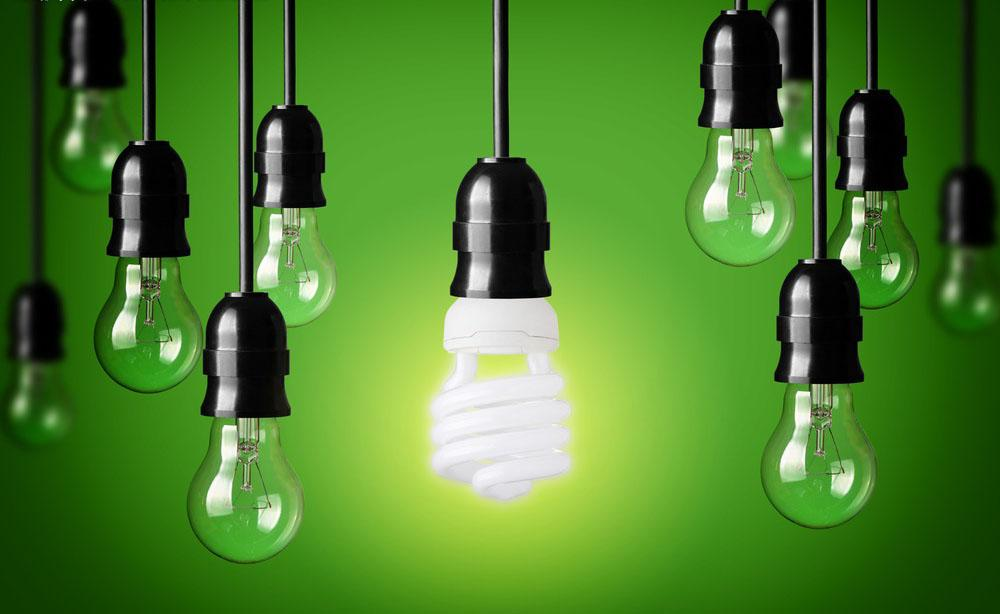
We can see that green and low-carbon development has become the defining foundation of the lighting industry. While policy is a major driving force, technological advancements and market demand are also accelerating this transformation. China has set clear targets for carbon peaking and carbon neutrality, making energy conservation no longer optional but a national strategic priority. As a major consumer of electricity, lighting holds significant potential for energy savings. Statistics show that in public buildings, lighting and socket power consumption account for a substantial share of total electricity use.
Taking Shanghai as an example, according to the 2022 Energy Consumption Monitoring and Analysis Report of Government Office Buildings and Large Public Buildings in Shanghai, lighting and socket electricity consumption in monitored large public buildings accounted for approximately 45% of total energy use in 2022. This means that every high-efficiency luminaire represents considerable potential for energy savings. Driven by policy, the industry has begun to adopt green standards as a core development direction, while the widespread adoption of LED light sources provides the technological foundation for achieving this goal. LEDs are inherently energy-efficient, low in power consumption, and long-lasting. At the same time, the advancement of intelligent control technologies has enabled on-demand lighting and zoned dimming, further reducing energy consumption.
Market demand is also pushing the industry toward greener development. Modern consumers and businesses are no longer satisfied with brightness alone; they increasingly value energy efficiency, comfort, and healthy lighting environments. Statistics indicate that when a mid-sized factory replaces 500 sets of traditional luminaires with LED fixtures, it can save over RMB 300,000 in annual electricity costs, with a payback period of only 1.5 years—delivering both economic and environmental benefits.
Similarly, in large office buildings and shopping malls, intelligent dimming systems can automatically adjust brightness based on natural daylight and usage scenarios, optimizing energy consumption. In high color-rendering environments such as museums, hospitals, and art galleries, high-efficiency LED lighting not only ensures superior lighting quality but also reduces energy usage, demonstrating a balance between green principles and lighting performance.
From the perspective of the lighting industry itself, green and low-carbon development is increasingly enhancing corporate competitiveness. As both domestic and international markets place greater emphasis on energy-efficient and environmentally friendly products, high-efficiency, low-carbon LED solutions have become a key competitive advantage for companies.
In export markets, LED products that comply with EU energy labeling requirements and the RoHS Directive are more likely to gain access to international markets. In the domestic market, high-efficiency luminaires are increasingly favored in green building projects and corporate procurement. In other words, energy efficiency is no longer just a social responsibility—it is also a critical driver of market competitiveness and technological innovation.
It is worth noting that the new standard introduces energy efficiency constraints for emerging product categories such as smart lighting. It further differentiates high-efficiency products while providing energy efficiency adjustments for high-end product types, including high color rendering, anti-glare performance, and intelligent control. Moreover, it extends energy-saving requirements from “operational efficiency” to “full-time efficiency,” incorporating factors such as standby power consumption.
These detailed requirements reflect the industry’s transition from a sole focus on brightness and efficiency toward full lifecycle green management. When designing and manufacturing each luminaire, companies must now consider operational energy use, standby consumption, and lighting quality. This holistic approach is driving the lighting industry toward greater precision and intelligence.
Green development is no longer just a policy-driven concept—it has become deeply embedded in the DNA of the lighting industry. Energy conservation, low-carbon performance, and intelligent design are no longer optional features but core requirements for industry growth. Only by embracing green development as a central strategy—driving technological innovation and optimizing both energy efficiency and user experience—can companies stand out in an increasingly competitive market. At the same time, consumers and society will benefit from more energy-efficient, comfortable, and healthy lighting environments.
Green development is now an unshakable foundation of the lighting industry and a key lever for achieving high-quality growth and low-carbon transformation.