National-Level Policy Support Creates a New Growth Window for Smart Lighting in 2026
In July 2026, the release of a new national policy once again brought the lighting industry into the spotlight. The Ministry of Commerce, together with seven other government departments, jointly issued the Implementation Opinions on Accelerating the Development of "Artificial Intelligence + Consumption" (Shang Jian Fa [2026] No. 89). The document outlines 17 specific measures aimed at advancing both "AI + Consumer Goods" and "AI + Consumer Services."
Notably, smart lighting has been identified as one of the key product categories promoted under China's national consumer stimulation policy. This marks the first time that smart lighting has received such a high level of policy attention. Previous government policies related to the lighting industry primarily focused on energy conservation, carbon reduction, and environmental sustainability. The new policy, however, shifts its emphasis toward consumer demand and intelligent lifestyle experiences, signaling a new stage of development for the smart lighting industry and opening a fresh window of policy-driven growth opportunities.
Ⅰ. The "Lighting Coordinates" in the Policy Text

The document contains 17 measures across five areas, one of which states: "Accelerate the launch of a new generation of AI-powered smartphones, smart computers, and smart TVs, and promote smart home products such as smart appliances, smart kitchens and bathrooms, and smart lighting." These are some phenomena worth paying attention to. The first point is that smart lighting is categorized under "increasing the supply of new AI products" rather than under traditional home furnishing categories. This means that policymakers regard smart bulbs as a tangible manifestation of artificial intelligence technology in the consumer market, rather than a mere upgrade of lighting fixtures. Its target audience should be similar to that of smartphones or smart home systems, with clear technological advancements.
The second point is that by placing smart lighting alongside smart appliances and smart kitchens and bathrooms, one can see the extent to which the state recognizes the role of lighting in the smart home ecosystem. Previously, discussions on smart homes largely focused on appliances, while lighting was often considered subordinate to them. By considering them together this time, it indicates that lighting has become a component that can stand on equal footing with appliances and has also gained policy attention.
Ⅱ. Why Consumer-Oriented Policies Matter to the Lighting Industry
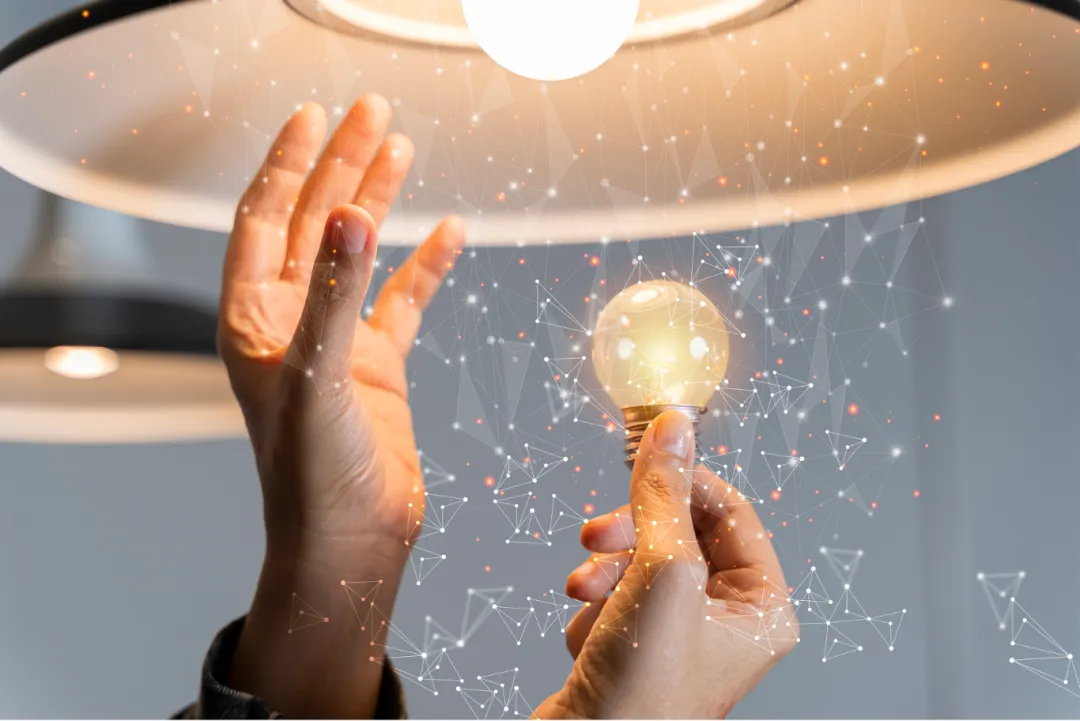
The lighting industry's policy framework has traditionally been supply-side oriented, focusing on issues such as energy efficiency standards, green manufacturing, and export rebates, while paying relatively little attention to consumer demand. The recently released Opinions offer a fresh perspective from which to examine this issue.
According to data from the National Bureau of Statistics, total retail sales of consumer goods reached 20,603.1 billion yuan in the first five months of this year, representing a year-on-year increase of 1.4%. However, in May, the figure fell to negative 0.6%, marking the first month-on-month decline since December 2022. In this context, the Opinions address existing problems from both the supply and demand sides, breaking structural bottlenecks such as "products without a market" and "demand without supply." Smart lighting has also been included in the national promotion list, making it one of the new consumer demands that policies aim to stimulate.
The signal this sends to the industry is that the development of the smart lighting market does not have to rely solely on individual corporate investment, but can be advanced with the support of government efforts. The document explicitly states that, within the broader policy framework for trade-in programs of consumer goods, local governments may introduce subsidy policies tailored to their specific circumstances, with a focus on promoting the adoption of next-generation smart devices. At the same time, alongside the creation of "AI + consumption" hubs and the establishment of AI experience centers, the use of public spaces such as commercial complexes and pedestrian streets is encouraged to pilot new business models.
Ⅲ. Policy Window and Industry Thresholds

The policy window has opened, but which companies will benefit from it depends on whether the industry itself is prepared. Smart lighting and traditional lighting differ significantly in their market logic. The former belongs to standardized products—"buy and use"—while the latter is a systemic product that requires on-site demonstration and experience after purchase for users to truly appreciate its effects. For instance, changes in color temperature and light, as well as dynamic lighting effects, can only be genuinely perceived through real-world scenarios. The establishment of "AI experience centers" and the application of smart lighting in commercial district settings, as advocated by the policy, precisely meet these requirements.
This indicates that the competitive moat for smart lighting is shifting from "product specifications" to "system capabilities plus channel experience." The policy provides a lever for promotion, but whether it can move the market depends on whether companies have already achieved, on the technological front, the transition from "single products" to "integrated solutions," and, on the channel front, the transformation from "selling lamps" to "selling light environments."
Conclusion

With the issuance of the Implementation Opinions on Accelerating the Development of "AI + Consumption", smart lighting has evolved from a niche industry topic into a component of national consumption promotion. While the document is not specifically targeted at the lighting industry, its impact is likely greater than that of many sector-specific policies—because it directly targets consumer demand.
When policy, technology, and consumer trends converge in resonance, the inflection point for the smart lighting market is approaching. Whether the industry can seize this opportunity, however, depends on how well it is prepared—and on whether "light source suppliers" have also developed the capability to provide "light environment services."