MIIT Highlights the Role of Nighttime Lighting in Cultural Tourism, Unlocking the Trillion-Yuan Nighttime Consumption Market
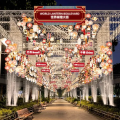
On September 7, at a press conference held by the State Council Information Office, Xin Yuansheng, Vice Minister of the Ministry of Industry and Information Technology (MIIT), said in response to a question: “We encourage local governments to develop nighttime tourism spaces that integrate exhibitions, recreational activities, and light shows, providing people with attractive places to experience traditional culture, relax, and enjoy leisure time after work and on weekends, while fully unlocking the consumption potential of the nighttime economy.”
For the lighting industry, this statement carries significant weight. It indicates that light shows are no longer merely optional elements of cultural tourism projects, but an approach actively encouraged at the national level and recognized for its potential to stimulate consumption. By positioning nighttime tourism spaces as part of the consumption landscape, the MIIT has sent an important signal: lighting is increasingly becoming an integral part of cultural tourism experiences and nighttime consumption, rather than simply a means of illumination.
I. From “Illumination” to “Activation”: Redefining the Role of Lighting

The MIIT’s latest statement is not an isolated policy signal. In January 2025, the General Office of the State Council issued the Several Measures on Further Cultivating New Growth Drivers and Boosting Cultural and Tourism Consumption, explicitly calling for support for the upgrading and renovation of nighttime lighting and nightscape lighting in commercial areas with concentrated consumer activity. Taken together, these developments point to a clear trend: national support for the nighttime economy is shifting from broad policy concepts toward concrete actions, with lighting continuing to play an important role in this transformation.
According to data cited by CCTV, China's nighttime economy reached a market size of RMB 50.25 trillion in 2024, with more than 60% of consumption taking place at night. Data from the Ministry of Culture and Tourism reportedly shows that in 2024, visitor traffic for nighttime tourism projects accounted for 42% of total scenic-area visitor traffic, while lighting design reportedly had a weighting of more than 35% in influencing tourists’ length of stay.
The emergence of “nighttime tourism spaces” indicates that lighting is no longer simply about illuminating roads and public spaces. Instead, it is evolving into an experience-driven engine capable of creating atmosphere and stimulating consumer interest.
The concept proposed by the MIIT—integrating exhibitions, sightseeing, and light shows—essentially represents a shift in lighting from a single functional role toward a more scenario-based, experiential, and culture-driven approach. This shift is becoming an important direction for the transformation of the lighting industry, while also creating new opportunities for industry growth.
Ⅱ. The Enterprise Response: From Selling Lamps to Selling "Light"

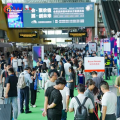
Policy signals have already elicited a response on the industry side. At the 2026 Guzhen Lighting Fair Summer Exhibition, the approach of "selling individual lamps" was already hard to find. Instead, it was replaced by the use of holographic projection and artificial intelligence to create light-and-shadow effects under virtual reality. This exhibition also invited companies that had previously participated in the planning and production of a series of large-scale cultural tourism projects, such as The Longest Day in Chang'an and Tengwang Pavilion, and intentionally had them purchase the exhibits. This indicates that the market has a strong desire for services that can provide a complete set of solutions.
Ⅲ. A New Coordinate System for the Lighting Industry

The statement by the Ministry of Industry and Information Technology has provided a new coordinate system for the lighting industry. In the past, people categorized products into indoor lighting, outdoor lighting, landscape lighting, and so on. However, "night tourism space" is a scenario concept that cuts across multiple categories—what it requires is a complete set of solutions encompassing luminaires, control systems, content planning, and operational management. When the various physical characteristics of a light bulb all become the same, competition will instead shift to focus on the ability to integrate systems and the ability to create content. For example, what Desheng Optoelectronics is doing is this: in addition to retaining optical engineers and mechanical engineers, it has also added many positions such as creative designers and project managers to meet the needs of the entire lifecycle.
Ⅳ. Conclusion
The Ministry of Industry and Information Technology's statement on "creating night tourism spaces that integrate display, garden tours, and light shows" represents a new expectation put forward for the lighting industry at the national level. As policy, technology, and market demand converge, competition in the lighting industry is upgrading from "products" to a contest of "scenario capabilities." In this context, enterprises that can understand spaces, tell good stories, and create atmospheres may find broader room for growth in the wave of the night economy.