From Selling Lamps to Selling "Light Services": AI Rewrites the Business Ledger of the Lighting Industry
In late September, at the main venue in Huangpu District's Yanzhong Green Space, in front of the "VOIDSPACE" installation at the 2026 Shanghai International Light and Shadow Festival, spectators input their personal feelings through interactive channels such as a mini-program, and the light colors across the entire wall flowed in response—transitioning from the verdant green of midsummer into the amber of late autumn.
This was not merely an art show, but a commercialization answer sheet on AI delivered by the global lighting giant Signify. On that day, Signify announced that its generative artificial intelligence agent (GenAI Agent) and connected lighting system would be extended to the landscape lighting field, enabling multimodal light interaction through Interact Landmark Flex. The company officially claims that the system can reduce content planning costs by approximately 80% and shorten the corresponding cycle.
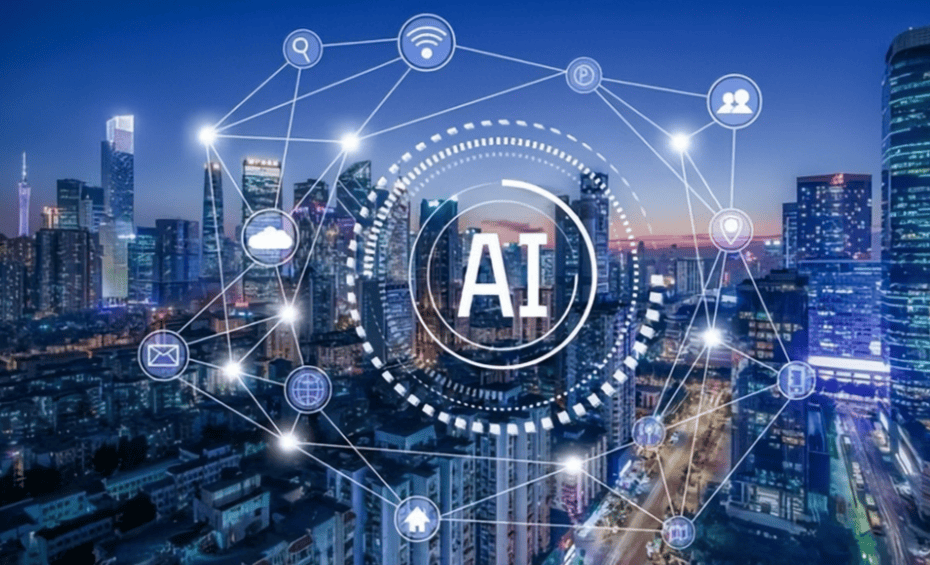
his already marks the third major scenario in which Signify's GenAI Agent has been deployed within a year: from Interact City Flex in the road lighting scenario, to Interact Office Flex in the office scenario, and now to Interact Landmark Flex in the landscape and cultural tourism scenario. Signify has defined 2026 as the "first year of AI lighting" in the words of Yin Kang, CEO of Signify Greater China. But for a century-old company with annual sales of 5.8 billion euros that is actively driving the iterative upgrading of its traditional business, the phrase "first year" conceals the real pressure facing the entire industry to urgently recalculate its business ledger.
Lighting is an ancient and mature business. As the technological dividend of LEDs replacing incandescent bulbs runs out, the global lighting industry is entering an era of stock competition. Data from Mordor Intelligence shows that the global smart lighting market was worth approximately 27.5 billion US dollars in 2026 and is projected to grow to 67.8 billion US dollars by 2031, with a compound annual growth rate of nearly 20%—but the main source of this growth is no longer hardware revenue from selling luminaires.
"What we sold in the past was lamps; what we will sell in the future are the services and experiences generated by light." This is the judgment made by Signify in its white paper titled "Illuminating a Smart Future: GenAI Agent Reshaping the New Blueprint of the Lighting Industry," released in May of this year. The subtext of this statement is that the business of simply selling hardware is nearing its ceiling, and lighting companies must find sustainable recurring revenue.
This is precisely the commercial logic starting point for AI's entry into lighting. As of the first quarter of 2026, Signify's global connected lighting points had reached 171 million. These lights, installed on urban roads, office buildings, and landscape architecture, are no longer one-off industrial products, but "light terminals" that continuously generate data, can be upgraded remotely, and support subscription services.

The question is: how do you make this terminal truly "run"?
Take landscape lighting as an example. This is a typically "project-based" business. A city's riverside light show or a landmark's nighttime illumination has in the past relied on professional lighting programming teams to produce content months in advance, and a single adjustment to a plan often means weeks of development cycles and hundreds of thousands of yuan in costs. Once the project is delivered, it ends, and subsequent content updates are weak, leaving a large amount of landscape lighting stuck in the awkward situation of "the same routine year after year" after its debut.
Signify's newly launched Interact Landmark Flex targets precisely this pain point. Users only need to describe light colors, atmospheres, or emotions in natural language—such as "Mid-Autumn moonlit night," "cyberpunk," or "spring cherry blossoms"—and the AI can automatically generate a set of "light recipes," converting parameters such as spectrum, brightness, color temperature, timing, and dynamic effects into executable lighting control commands.
"In the past, people had to learn how to control light; in the future, people only need to express themselves, and light will be able to understand." Qiu Ronghong, Signify's global chief innovation officer, summarized this shift in an interview.
An 80% reduction in cost and cycle time means a fundamental change in the business model: in the past, a city's landscape lighting was a "one-off engineering asset"; after AI's intervention, it has become an "operating platform" that can continuously generate content and dynamically update it by season, festival, or event. Operators no longer need to hire external programming teams for every update; instead, they can continuously produce content for this "light of the city" just like running a WeChat official account or a short-video account. For B2B customers, this is a migration from capital expenditure (CAPEX) to operational expenditure (OPEX); for lighting companies, it is a shift from one-off revenue from selling equipment to continuous revenue from software subscriptions, content services, and operations and maintenance upgrades.
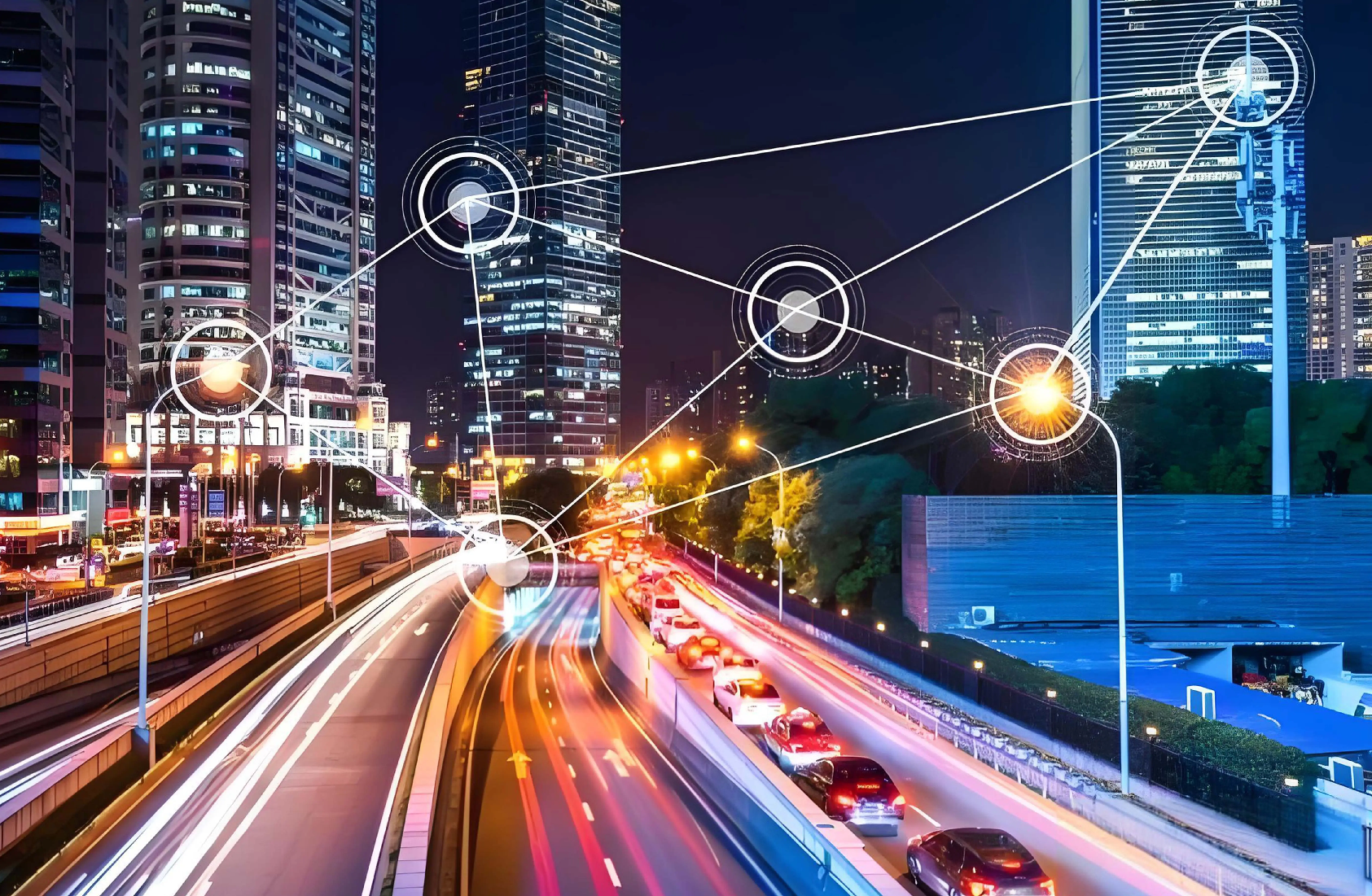
It is worth noting that Signify has not used a single AI solution to conquer the entire market, but has instead broken down three major scenarios into different commercialization logics. In the urban road scenario, AI solves the problem of "operational efficiency." Road lighting is one of the largest public electricity consumption items in a city. Interact City Flex uses AI to sense traffic flow, pedestrian flow, and weather, and automatically adjusts brightness and on/off strategies—essentially helping municipal customers calculate their "electricity bill" and "operations and maintenance bill." This is a payment model centered on energy-saving benefits.
In the office scenario, AI solves the problem of "human experience." Interact Office Flex dynamically adjusts the light environment based on indoor occupancy, natural light, and working hours, corresponding to the premium that corporate customers pay for employee health and productivity gains. In the newly launched landscape and cultural tourism scenario, AI solves the problem of "content productivity." This is the one with the greatest room for commercial imagination among the three scenarios—because cultural tourism scenic areas, commercial districts, and cultural tourism real estate all need continuous content updates to attract foot traffic, and AI has reduced the marginal cost of content production to an unprecedented low.
"Urban scenarios focus more on letting the lighting system do things well on its own, while cultural tourism scenarios focus more on making light better understand people and be more creative," Signify said.
Of course, AI lighting is not a solo performance by Signify. From leading domestic lighting companies to internet giants, almost every player touching on "intelligence" is talking about AI lighting. But the real commercialization threshold may not lie in the large models themselves. In Qiu Ronghong's view, the core barrier of AI lighting is "long-accumulated lighting expertise, real-world scenario experience, and user needs." Translated into business language, this means: anyone can connect to a general-purpose large model, but what color temperature makes people relax, what brightness is suitable for reading, and what the differences in light environments are between a city's main roads and pedestrian streets—this know-how, accumulated in the operational data of 171 million real connected lighting points, is the moat that is difficult to simply replicate.
This is also why Signify chose to launch the landscape scenario in China first. China has the world's densest urban landscape lighting projects, its most active cultural tourism consumption market, and its richest application scenarios. The model of "validating new capabilities in China first, then replicating them globally" is becoming the innovation path of this Dutch company. "I believe that in the future, such capabilities will enter even more scenarios, such as public spaces, commercial spaces, cultural spaces, and even more places in our daily lives," Qiu Ronghong said.
AI lighting is still in its early stages. The stability of multimodal interaction, the aesthetic controllability of content generation, and the boundaries of data security and privacy all need to be tested in more real-world projects. But the direction is already clear: competition in the lighting industry is shifting from "whose lamps are brighter and more energy-efficient" to "whose light better understands scenarios and can continuously generate service value." From "illuminating spaces" to "operating spaces," AI is rewriting the business ledger of this ancient trade. And 2026 is merely the first page of this new ledger.